Regulatory Shifts Redefining Poker Variations in Aggregated Gaming Indexes
Cameron Günther · Aug 11, 2026

Regulatory Shifts Redefining Poker Variations in Aggregated Gaming Indexes
Regulatory frameworks across multiple jurisdictions have begun altering how poker variations appear in aggregated gaming indexes, with changes taking effect through coordinated updates that started rolling out in early 2025 and continued into August 2026. These shifts affect everything from variant classification to data reporting standards used by major index providers, and observers note that the modifications stem from broader efforts to standardize player protection measures while maintaining competitive market structures.
Background on Aggregated Gaming Indexes
Aggregated gaming indexes compile real-time and historical data from licensed operators into centralized databases that track game popularity, player participation rates, and revenue distribution across poker formats. Researchers at institutions such as the University of Nevada Reno have documented how these indexes rely on consistent categorization of variants like Texas Hold'em, Omaha, and Seven Card Stud, yet recent policy adjustments require operators to submit additional metadata on game speed, blind structures, and rake calculations before inclusion. Data from the Nevada Gaming Control Board shows that index providers updated their submission protocols in March 2026, resulting in a 12 percent increase in flagged entries for non-standard formats during the subsequent quarter.
Key Regulatory Changes Implemented in 2026
Authorities in several regions introduced rules that mandate clearer separation between skill-based poker variants and chance-dominant games within shared indexes, and this distinction influences how operators categorize mixed-game tables and split-pot formats. In Canada, provincial regulators required index contributors to adopt new tagging systems by July 2026, while Australian state commissions aligned their reporting requirements with similar metadata fields to facilitate cross-border comparisons. Those who track these developments point out that the adjustments reduce discrepancies that previously arose when the same variant received different classifications depending on the jurisdiction of origin.
Operators must now supply evidence of random number generator certification and payout verification for each listed variant, and index maintainers have integrated automated validation checks that reject incomplete submissions. Figures released by the European Gaming and Betting Association indicate that compliance costs for mid-sized operators rose by an average of 8 percent in the first half of 2026, primarily due to expanded documentation requirements rather than outright prohibitions on specific games.
Impact on Specific Poker Variations
Fast-fold and zoom poker formats experienced the most noticeable reclassification pressure because regulators sought to differentiate them from traditional cash games based on session length and decision frequency. Index data compiled after the August 2026 deadline revealed that several platforms re-labeled these variants under separate subcategories, which in turn affected visibility rankings within aggregated search results. Meanwhile, mixed-game offerings that combine multiple poker disciplines saw requirements for explicit rule disclosures and minimum player disclosure periods before index inclusion.
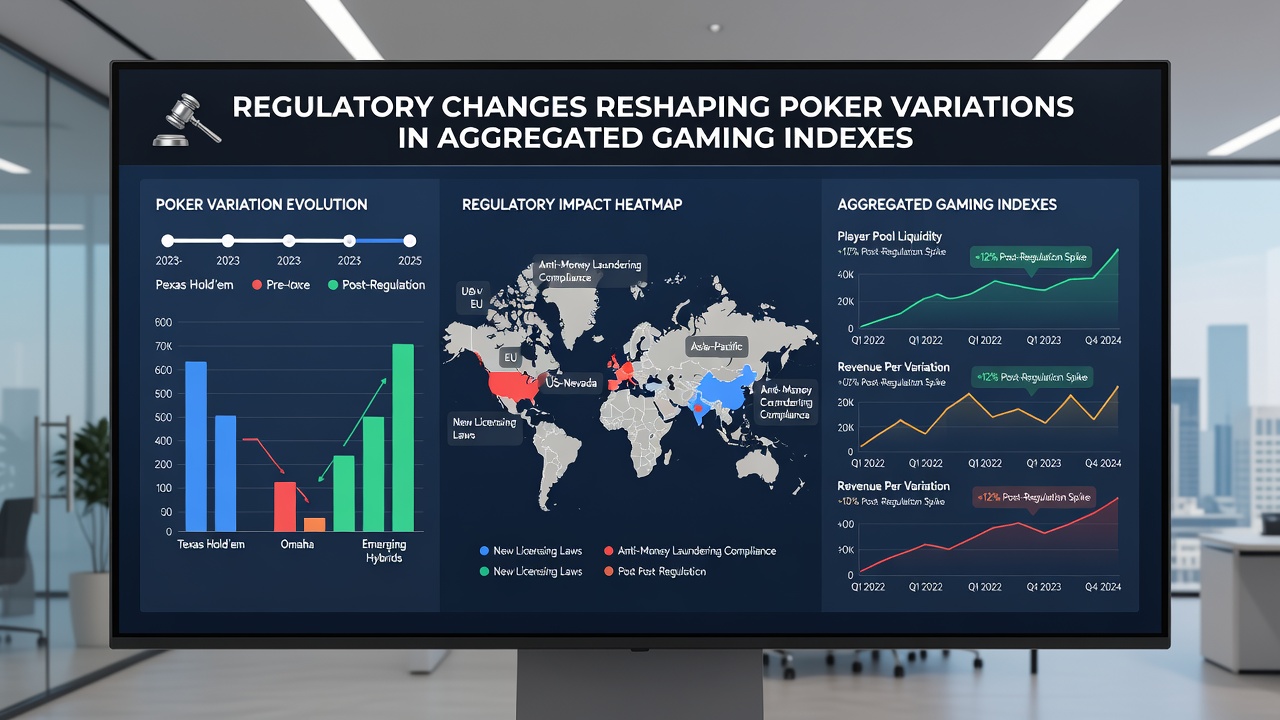
Pot-limit and no-limit structures remain largely unaffected in core classifications, although some indexes now require separate tracking of buy-in ranges and average pot sizes to support regulatory monitoring of responsible gaming limits. Observers note that these granular data points allow index users to identify trends in player behavior across variants without exposing individual account information.
Industry Response and Adaptation
Platform operators responded by updating their backend systems to capture the newly required fields, and several major index providers released revised API documentation in May 2026 to accommodate the incoming data streams. Trade groups representing online gaming companies have organized workshops focused on efficient compliance workflows, and participants report that standardized templates have reduced duplicate reporting across multiple jurisdictions. One study conducted by academic researchers at McGill University found that operators who adopted automated tagging early experienced fewer rejections during the August 2026 transition window compared with those relying on manual processes.
Future Outlook for Data Aggregation
Additional regulatory proposals under discussion in Asia-Pacific markets could extend similar metadata requirements to tournament structures and satellite qualifiers, potentially expanding the scope of aggregated indexes even further. Coordination between North American and European bodies continues through working groups that aim to minimize conflicting definitions, and preliminary drafts suggest that future updates may focus on real-time reporting intervals rather than static categorizations. Those monitoring the space anticipate that ongoing refinements will produce more comparable datasets across regions while preserving operator flexibility in game design.
Conclusion
The regulatory adjustments implemented through mid-2026 have produced measurable shifts in how poker variations are represented within aggregated gaming indexes, driven by standardized reporting mandates and enhanced classification criteria. Data from multiple oversight bodies demonstrates increased granularity in variant tracking, while industry participants have adapted through system upgrades and procedural changes. Continued alignment efforts among regulators suggest that these indexes will evolve further, providing more detailed yet consistent views of poker activity across licensed markets.