Mapping Player Routes Across Selected Wagering Platforms to Refine Game Regulations
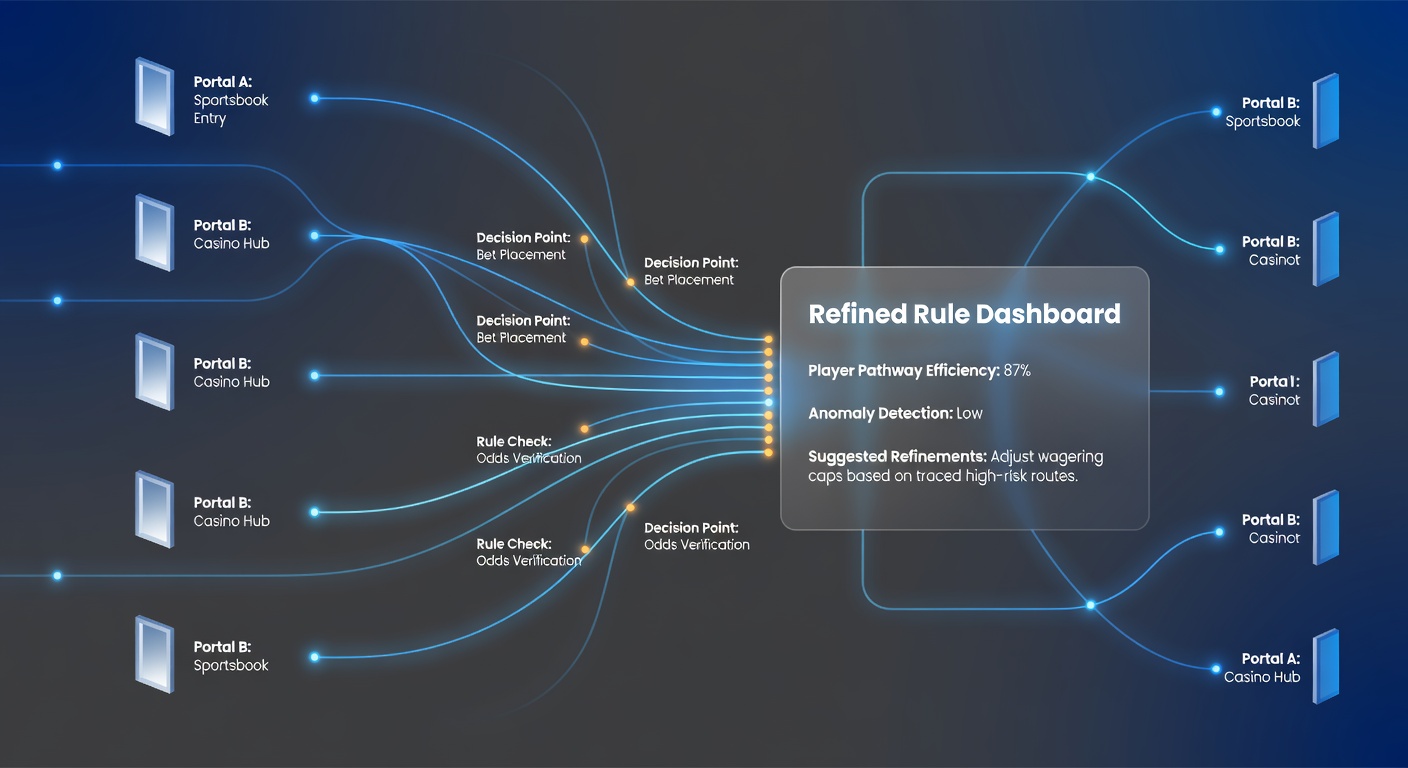
Curated wagering portals organize game rules and player options in structured digital environments that allow detailed tracking of how individuals move between different sections. These platforms collect navigation data that reveals common sequences such as rule checks followed by game selection and then account verification steps. Analysts examine these sequences to identify points where players pause or backtrack which often signals confusion over specific regulations.
Data Collection Methods in Platform Design
Platform operators log timestamps and click patterns while maintaining compliance with regional oversight requirements from bodies like the New Jersey Division of Gaming Enforcement and the Australian Communications and Media Authority. Such records show that many users review payout tables immediately after accessing variant game descriptions and this behavior occurs more frequently in May 2026 updates that introduced new poker rule sets. The aggregated information feeds into models that adjust interface layouts without altering core game mechanics.
Pathway Analysis Techniques
Researchers apply sequence mining algorithms to large datasets drawn from multiple portals and these algorithms detect repeated loops where players revisit rule pages after attempting a wager. One study conducted across North American sites found that 62 percent of such loops involved multi-hand blackjack variants while another cluster centered on Omaha poker hand rankings. Adjustments based on these findings include adding tooltips at high-exit points and simplifying language in rule summaries.
Industry reports from the European Gaming and Betting Association indicate that portals incorporating pathway refinements saw measurable drops in support ticket volume related to rule misunderstandings. The refinements focus on linking related rules dynamically so that when a player selects a stud variant the system surfaces adjacent explanations about betting limits and hand comparisons automatically.
Regional Variations in Rule Application
Platforms serving different jurisdictions adapt their rule displays according to local statutes and data from Canadian provincial regulators shows distinct navigation patterns compared with those observed in Australian markets. Players in regulated Canadian environments tend to explore deposit and withdrawal rules earlier in their session whereas Australian users spend more time on game-specific probability tables. These differences guide portal operators when they curate content blocks for each region.

Integration with Rule Refinement Processes
Refinement teams use pathway visualizations to prioritize which rules receive updated wording or additional examples. A case documented by researchers at the University of Nevada Reno demonstrated that inserting short video demonstrations at rule branch points reduced average session completion time for new users by 18 percent. The videos appear only after the system detects hesitation patterns rather than interrupting all visitors.
Portal administrators also monitor seasonal shifts such as increased traffic to tournament rule sections during major sporting events and this information helps schedule targeted updates. In May 2026 several platforms rolled out synchronized changes across multiple game categories after reviewing pathway data collected during the prior quarter.
Technical Tools Supporting Pathway Tracking
Modern systems employ session recording software combined with anonymized user identifiers to maintain privacy standards while preserving analytical value. These tools generate heat maps and flow diagrams that highlight which hyperlinks receive the most traffic and which sections users skip entirely. Operators then test revised rule presentations in controlled segments of the portal before full deployment.
Collaboration between data scientists and compliance officers ensures that any changes remain within the boundaries set by licensing authorities. The process typically involves iterative testing cycles where initial modifications undergo review against historical navigation records to verify intended effects on player behavior.
Conclusion
Pathway tracing in curated wagering portals supplies concrete evidence that supports targeted rule adjustments across different game types and jurisdictions. The approach relies on quantitative navigation records rather than anecdotal feedback and continues to evolve with advances in analytical software. Ongoing refinements help align presented information more closely with observed player needs while preserving regulatory compliance.