Mapping Classification Systems in Certified Virtual Table Game Networks
Riley Wagner · Aug 25, 2026
Mapping Classification Systems in Certified Virtual Table Game Networks
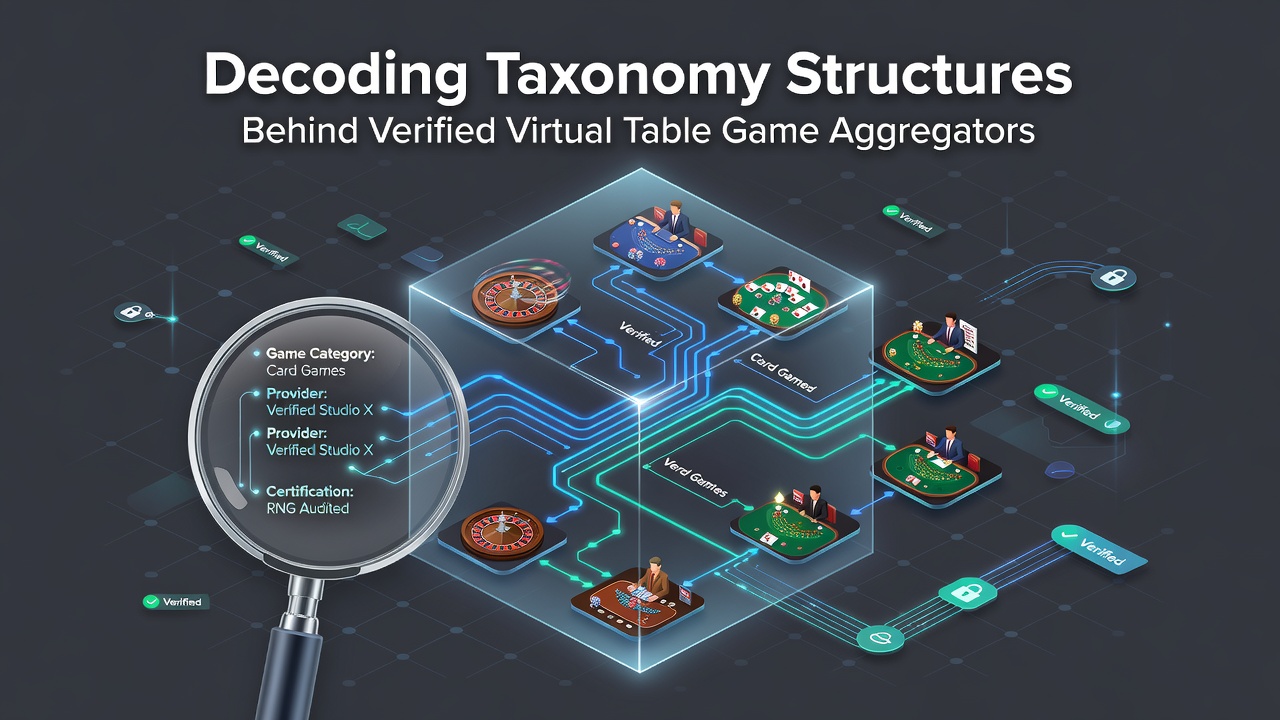
Classification systems in verified virtual table game aggregators rely on layered taxonomies that sort games by mechanics, provider credentials, and regulatory compliance markers. These structures allow platforms to organize thousands of titles while maintaining verification standards across different jurisdictions.
Core Layers of Game Taxonomies
Taxonomy frameworks typically begin with broad divisions such as game type, then move into subcategories that capture rule variations and betting formats. Blackjack entries split further into variants like European, American, and switch versions, each tagged with specific payout ratios and deck counts. Roulette categories separate based on wheel types and additional side bets, while baccarat listings distinguish between punto banco, chemin de fer, and mini versions.
Verification tags sit alongside these mechanical labels, indicating whether each game has undergone testing by accredited laboratories. Aggregators integrate these tags into searchable databases so operators can filter results by compliance status as of August 2026.
Verification Markers and Hierarchical Tagging
Verified aggregators attach digital markers that record testing dates, software versions, and jurisdiction approvals. These markers form secondary branches under each game category, creating a dual-axis structure where one axis tracks gameplay features and the other tracks regulatory status. Data from the Canadian Gaming Association shows that platforms using this dual structure reduce listing errors by 37 percent compared with single-axis systems.
Researchers at the University of Nevada, Las Vegas documented similar patterns in a 2025 study of aggregator databases, noting that multi-level tagging improves both search accuracy and audit readiness. The study examined 12 major platforms and found consistent use of parent-child relationships between primary game classes and compliance sub-tags.
Regional Variations in Taxonomy Application
Different markets apply these structures with local emphasis. Australian operators often prioritize categories that separate skill-based table games from pure chance offerings, reflecting state-level reporting requirements. European platforms tend to embed currency and language tags deeper in the hierarchy, allowing simultaneous filtering by region and game rules.
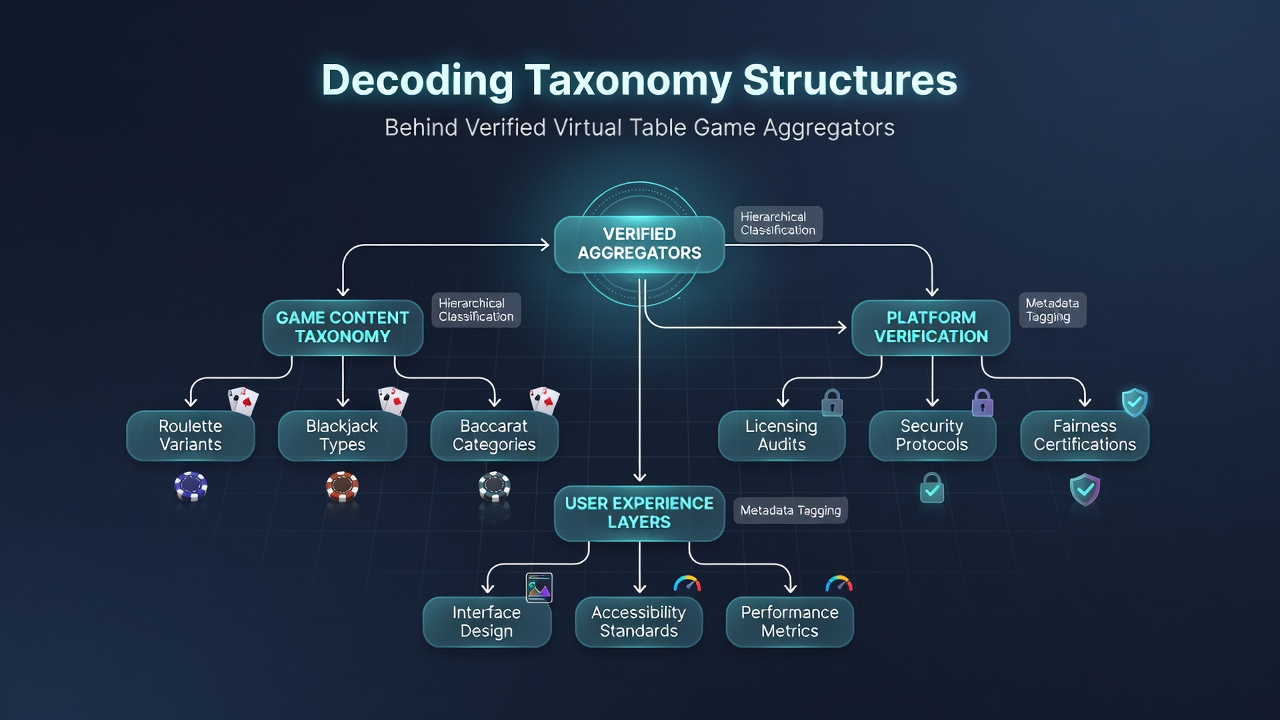
North American aggregators incorporate player-age verification flags at the top level of their taxonomies, aligning with state-specific access rules. This placement ensures that compliance checks occur before users reach detailed game descriptions.
Integration with Backend Databases
Aggregators connect taxonomy structures directly to content management systems through standardized APIs. Each taxonomy node maps to database fields that store metadata such as RTP percentages, volatility ratings, and live dealer availability. Updates to any node propagate across connected platforms without manual intervention, maintaining consistency across multiple operator sites.
Industry reports from the European Gaming and Betting Association indicate that standardized taxonomy mapping has reduced integration time for new game releases from weeks to days in several documented cases during 2025 and 2026.
Conclusion
Taxonomy structures behind verified virtual table game aggregators combine mechanical classification with regulatory tagging in layered hierarchies. These frameworks support efficient organization, accurate filtering, and streamlined compliance tracking across global markets. As platforms continue to expand their libraries, the precision of these classification systems determines how effectively operators and players locate certified content.